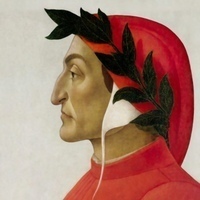
Jaron Lanier, being typically insightful:
“We have to say consciousness is a real thing and there is a mystical interiority to people that’s different from other stuff because if we don’t say people are special, how can we make a society or make technologies that serve people?”
The profile is titled, “The danger isn’t that AI destroys us. It’s that it drives us insane.” Which does certainly seem like a more likely possibility.
Then, in all labyrinthine economies
there are obscure nooks into which Authority never pokes a suspicious nose
~Auden, “The Horations”
What has become of us as a people that we can possess the beautiful only in dreams.
~Robert Walser
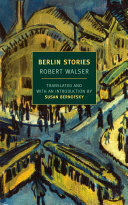
Currently reading: Berlin Stories by Robert Walser 📚
The cultivation of taste, in morals as well as in art, is neither snobbish nor elitist; it is, rather, the key means by which we emancipate ourselves from the tyranny of passions that the people who make our smartphone apps would like to see dominate us.
~Alan Jacobs, reflecting on David Hume & social media 🔗
I encountered a stunning book of photos on the Getty’s website today: Kazumasa Ogawa’s Some Japanese Flowers, from 1896.
19th-century photograph is always shocking & disorienting—how foreign, yet contemporary. 📚

Currently reading: The Battle for Your Brain by Nita A. Farahany 📚
Her contention is that control over our own inner life will become increasingly fraught in coming years, as advances in neurotech & pharma combine to create new ways of monitoring, interpreting, & responding to our brainwaves.
I’m only a couple chapters in, but she lays out so clearly how tech is building on-ramps to this surveillance—through gamification, virtual reality, & other developments that are pitched as innocuous & “free”.
Rest in peace, Kenzaburo Oe. My friend Caleb introduced me to Oe back in 2004 or 2005, and I came to love his novels A Personal Matter and An Echo of Heaven.
His Paris Review interview is truly fascinating.
Rest in peace, Wayne Shorter, one of the very greats. 🎶
Current listening: Kendrick Scott, Reverence.
A 2009 album featuring some incredible players: not just Scott, but Gerald Clayton, Walter Smith III, Mike Moreno, and Derrick Hodge. 🎶
The more I use Arc Browser the more I love it—and I’ve been using it a lot! It restores some joy, some delight, to using the Internet. 🔗
Start of a new season for my beloved MNUFC tonight. I’m not optimistic about the season, but I am looking forward to it! ⚽️ #COYL
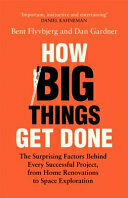
Finished reading: How Big Things Get Done by Bent Flyvbjerg 📚
For the most part, a very good and useful book on project management—research grounded in reality, presenting some useful heuristics. Fans of Taleb & Kahneman/Tversky will like it.

Nicholas Dames on literary studies 🔗 📚
What happened to literary studies?
If professionalization was the flaw in the construction of the bridge, making it unstable, it turns out there’s a meteor heading for the bridge anyway: the steady diminution of literature’s role in a culture where electronic, networked media is dominant. […]
By lowering the barrier to entry, the Internet encouraged an early 21st-century efflorescence of occasional criticism and spontaneous theorizing that fostered vibrant subcultural readerships.
I believe that the coming decades will be shaped by a restoration of the humanities to non-professional, non-credentialed, non-university contexts. The Internet will continue to provide new forms not just for criticism but for pursuing literary education outside formal degrees.
This will be a good thing, though, sadly, it will be accompanied by the closure of many liberal arts colleges.

Finished reading: Skin in the Game by Nassim Nicholas Taleb 📚
Currently reading: How Big Things Get Done by Bent Flyvbjerg 📚
Current listening: Chris Potter, Got the Keys to the Kingdom. 🎵
Absolutely scorching live set featuring a dream-team of some of my favorite musicians: not just Potter, but also Scott Colley on bass, Marcus Gilmore on drums, and Craig Taborn on piano. Highly recommended!

Currently reading: Night Train by A. L. Snijders; translated by Lydia Davis 📚