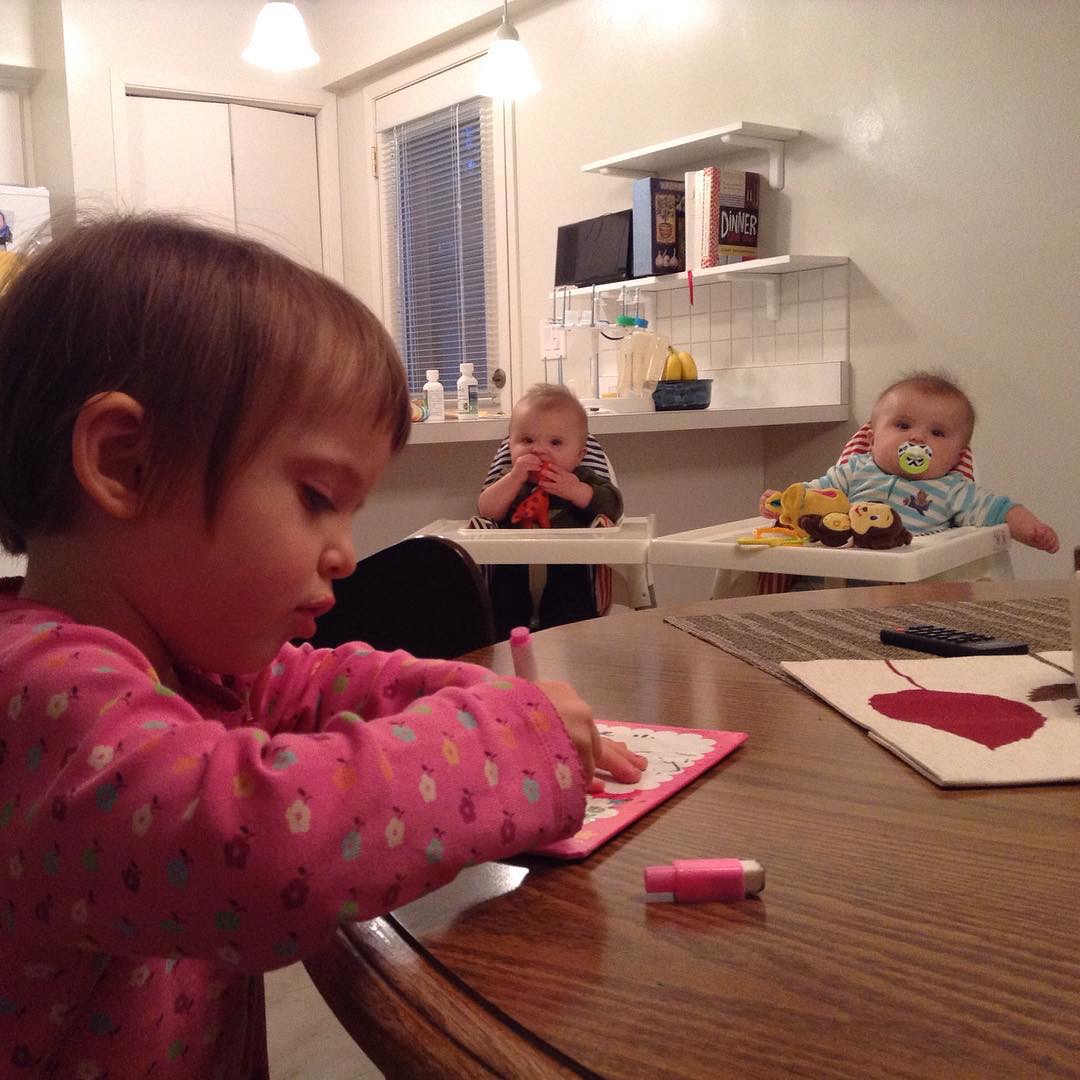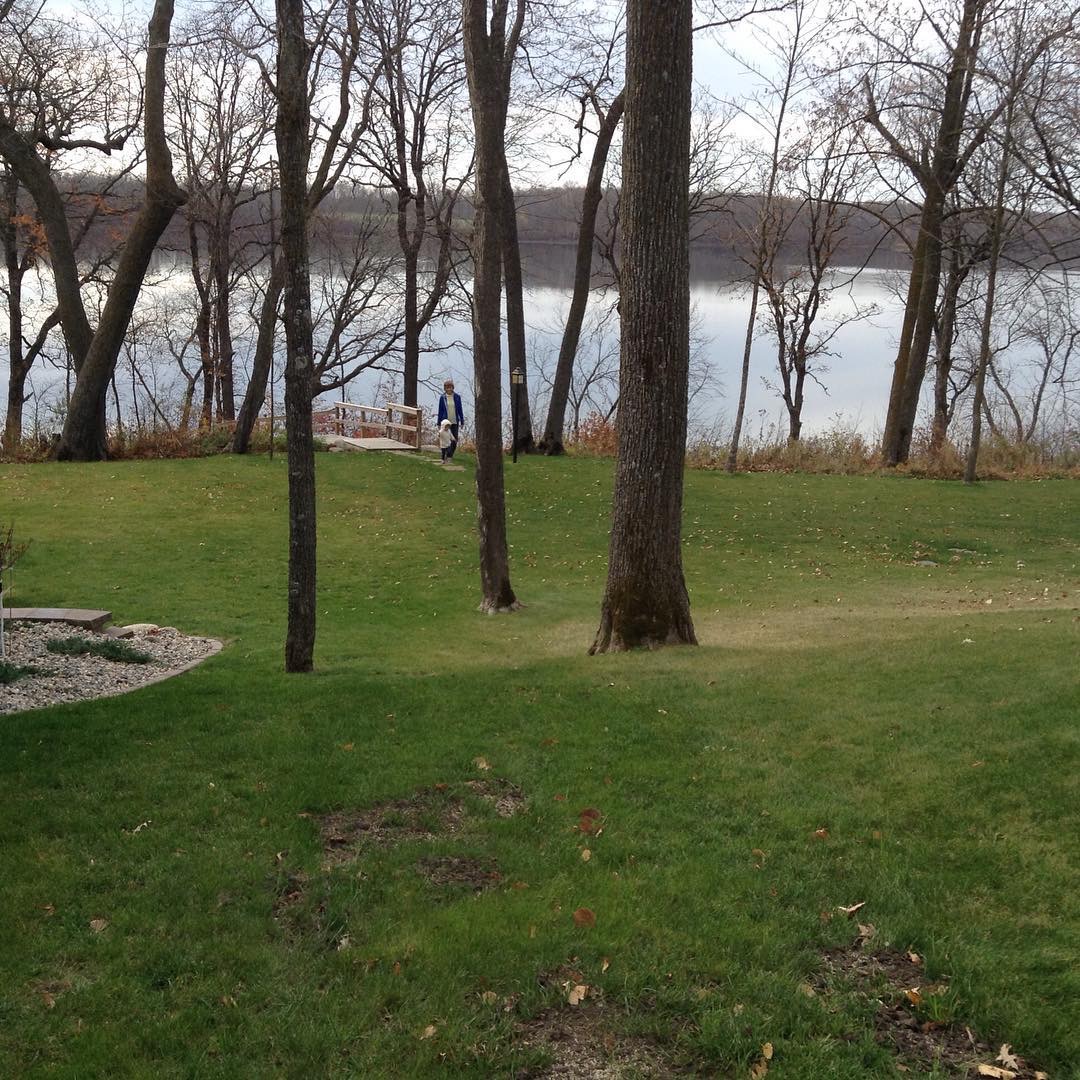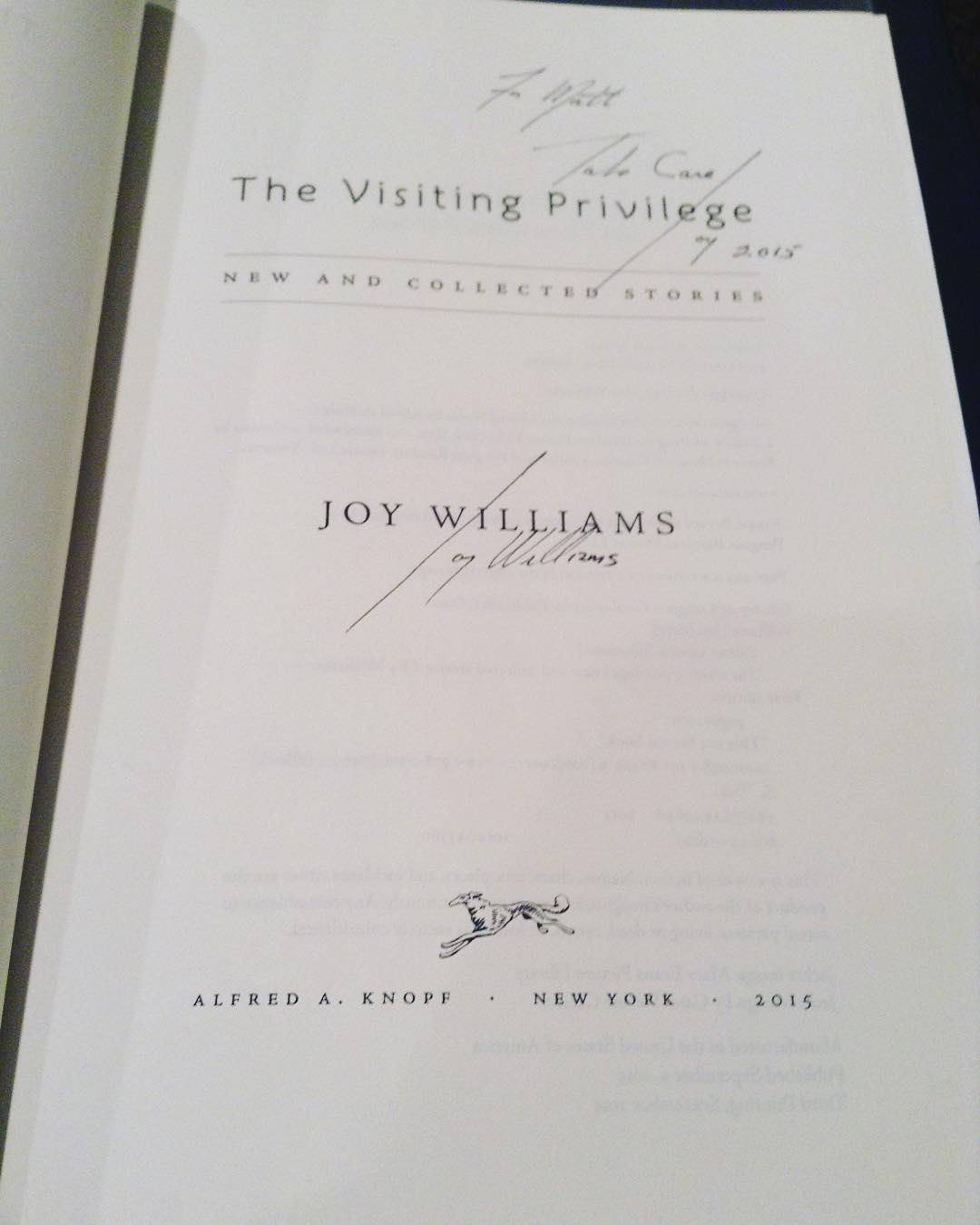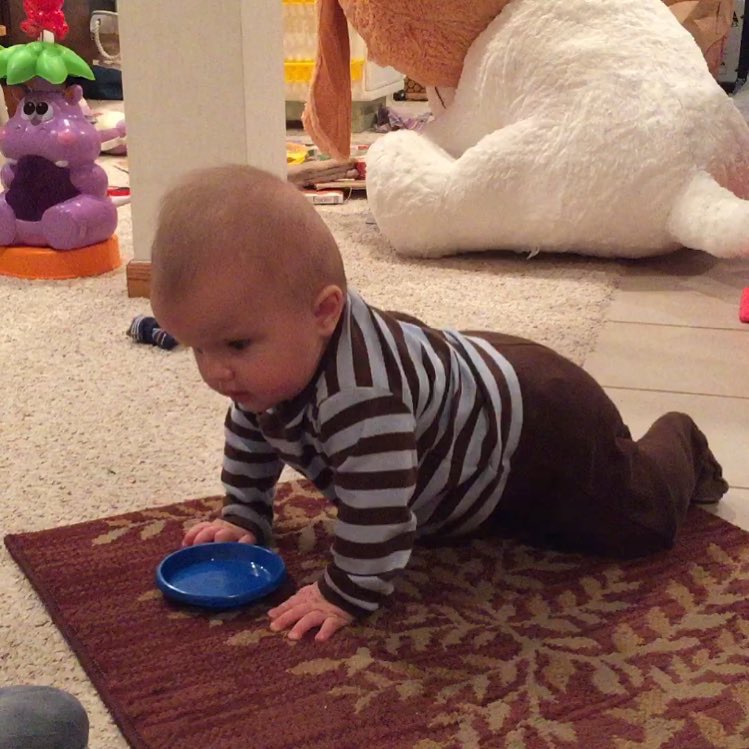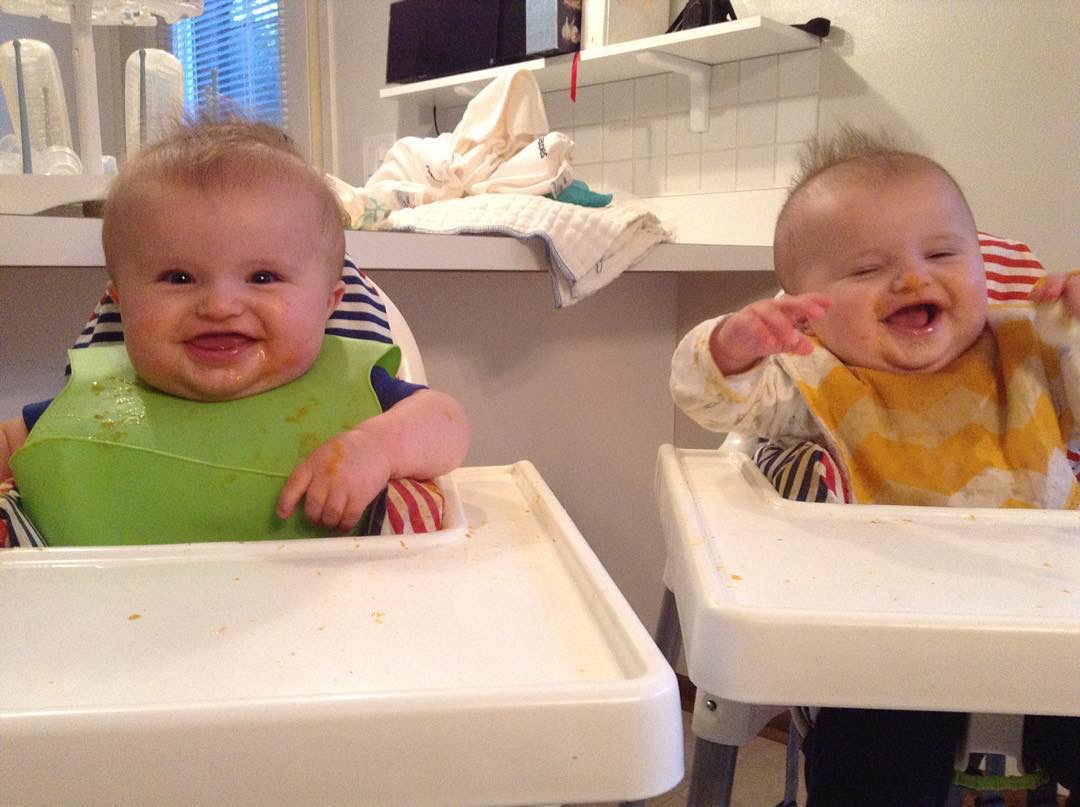
Sleeping in on a Friday.

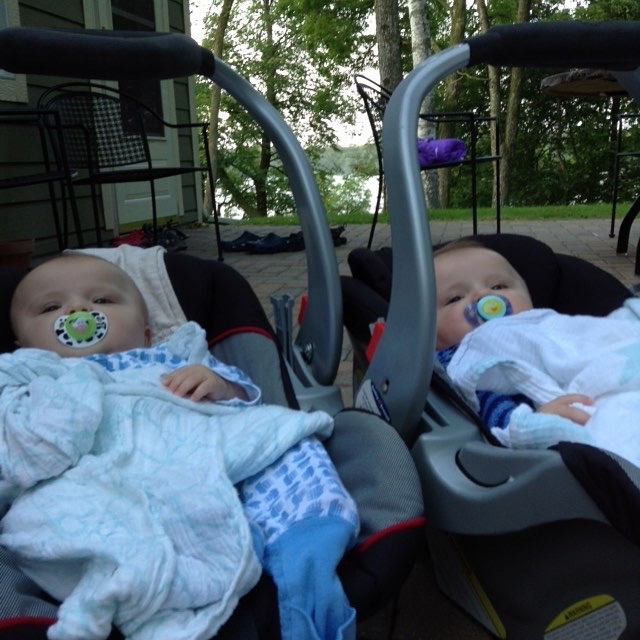
Abraham Andrew and Samuel Ryan, soaking up some sun at 4 days old. Enjoy it while it lasts, boys.

Italo Calvino on City & Memory

The city, however, does not tell its past, but contains it like the lines of a hand, written in the corners of the streets, the gratings of the windows, the banisters of the steps, the antennae of the lightning rods, the poles of the flags, every segment marked in turn with scratches, indentations, scrolls.

~Italo Calvino

James Poulos on the New Adventurism

Unhappily, however, the wisdom-loving aristocrat’s appreciation for non-attachment is a harder sell than a sybaritic adventurism once restricted to a dedicated class of decadent nobles.

~James Poulos

Party time, with pickle.

Surprise spaghetti night with “nampa Kim”!

Samuel Taylor Coleridge on the Reading of Fairy Tales

My Father (who had so little of parental ambition in him, that he had destined his children to be Blacksmiths &c, & had accomplished his intention but for my Mother’s pride & spirit of aggrandizing her family) my father had however resolved, that I should be a Parson. I read every book that came in my way without distinction — and my father was fond of me, & used to take me on his knee, and hold long conversations with me. I remember, that at eight years old I walked with him one winter evening from a farmer’s house, a mile from Ottery — & he told me the names of the stars — and how Jupiter was a thousand times larger than our world — and that the other twinkling stars were Suns that had worlds rolling round them — & when I came home, he shewed me how they rolled round —. I heard him with a profound delight & admiration; but without the least mixture of wonder or incredulity. For from my early reading of Faery Tales, & Genii &c &c — my mind had been habituated to the Vast — & I never regarded my senses in any way as the criteria of my belief. I regulated all my creeds by my conceptions not by my sight — even at that age. Should children be permitted to read Romances, & Relations of Giants & Magicians, & Genii? — I know all that has been said against it; but I have formed my faith in the affirmative. — I know no other way of giving the mind a love of ‘the Great’, & ‘the Whole’. — Those who have been led to the same truths step by step thro’ the constant testimony of their senses, seem to me to want a sense which I possess — They contemplate nothing but parts — and all parts are necessarily little — and the Universe to them is but a mass of little things. — It is true, that the mind may become credulous & prone to superstition by the former method — but are not the Experimentalists credulous even to madness in believing any absurdity, rather than believe the grandest truths, if they have not the testimony of their own senses in their favor? — I have known some who have been rationally educated, as it is styled. They were marked by a microscopic acuteness; but when they looked at great things, all became a blank & they saw nothing — and denied (very illogically) that any thing could be seen; and uniformly put the negation of a power for the possession of a power — & called the want of imagination Judgment, & the never being moved to Rapture Philosophy!

~Via Alan Jacobs

Marilynne Robinson on the Beauty of Classic Language

I like dealing with people whose vocabulary and worldview is less media–saturated than ours is. I think that there is an acceleration of a kind of slang shorthand that is very characteristic of our period but not especially beautiful. It is meant to be ephemeral, in a way that when you’re using language that you would consider “hip”—or whatever the present word would be—you are using it in the knowledge that in a year or two years, you would be embarrassed to use the same word. I like to use language that doesn’t have all these little signifiers around it, that seems to me more classic, in the sense of being unrecognizable in terms of a particular decade.

~ Marilynne Robinson

Mesmerized by hopping animals. #Walker75

Philip Roth on Richard Stern

I met Dick in the fall of 1956, and thus was initiated a fifty-seven-year-long literary conversation and friendship. In 1956, Dick was just starting out in the University of Chicago English department while I was teaching freshman composition in the College. He was twenty-seven, I was twenty-three. I had just returned from the army to Chicago, where I’d earlier received an MA in English. Dick and I started to talk immediately about writers and books and didn’t stop until just a week or two before his death.

His assiduous engagement with everything literary never diminished. He was reading fiction, writing fiction, teaching fiction (over the phone to me, in bed with his wife, Alane), he was talking about fiction right down to the end. For me, as his friend and fellow writer, his appetite for literature, along with his knowledge and understanding of literature, was an inexhaustible treasure.

What did I prize most in him? What do I miss most about him? His titanic scrutinizing engrossment with every last vicissitude of existence, his raptness and his rapture, his lucidity, his being perpetually wide awake as if he were being stung by life, his childlike geniality, his gentle and not-so-gentle force, the swiftness of his perspicacity, his impulse to celebrate, his miniscule antipathies and his benevolent urges and his wide-ranging fellow feeling, his imaginative merging with other lives, the bonding of his vulnerability to his fortitude, a steely literary integrity—beyond everything, the way he was weighted down by love. Because the wellspring for his daemonic attentiveness was, in the widest sense, love.

His mindful presence here, his joy in being among us, his absorption in everything both within and beyond his ken, seemed never to slacken. Living, for Dick, was an unceasing stimulant and the engagement with life never ceased to evolve. Everywhere this urbane and not entirely unwily man went, mankind flabbergasted and enkindled him. His direct apprehension of the real was amazing.

Golk, Europe, In Any Case, Stitch, Other Men’s Daughters, Natural Shocks, A Father’s Words, Pacific Tremors, exquisitely imagined and surpassingly executed by one of our American era’s most distinguished, if unheralded, novelists and men of letters, Richard Stern, who was born in Manhattan on 25 February 1928 and for decades, in the environs of the University of Chicago, lived the life of the mind and the imagination (tempered, as his biographical record will show, by the daily trials, the inescapable crises, the stunning losses and unavoidable conflicts that are engendered simply by going about one’s business on this earth for eighty-four years) and who, after enduring everyman’s thousand ups and downs, died beside his adoring, brilliant, devoted wife, Alane, far from the Hyde Park neighborhood and its renowned university, in his last home, on little Tybee Island, the easternmost point in Georgia, on 24 January 2013—a magnanimous friend, a formidable writer, an exceptional man.

~Philip Roth

Nightly reading to Curious George in the laundry basket.

Christmas reading with uncle @andrewkaul and auntie @baileekaul h/t on Once Upon an Alphabet: @brainpicker

Costin Christmas

Jonathan Rée on Foucault

He could not cover the whole story in his six lectures at Louvain, but he got under way with detailed expositions of a ceremonial chariot race in the Iliad and Oedipus’ belated recognition of his guilt in Oedipus Rex. Between these two moments, Foucault says, we must postulate the emergence of a new kind of legal process, based not on the outcome of a tournament between antagonists, but on the authority of a third party: a judge, with a duty to discern a single truth transcending the clash of claims and counter-claims. He pauses to suggest that dramatists from Sophocles to Shakespeare, Corneille and Schiller were always preoccupied with the connection between justice and avowal, but hastens back to ancient Greece, and the philosophical idea of self-knowledge as self-mastery. Against this background, Christian practices of truthfulness mark a revolutionary break, appealing not to the luminous certainty of religious or philosophical orthodoxy, but to the unfathomable recesses of the subject’s sinful soul. For a Christian, self-knowledge was not a means to heroic autonomy, but an exercise in humble submission and an opening towards the tormented spirituality that Foucault calls “the hermeneutics of the self”. Formalized rituals of public penance would later give way to informal confessions to a priest, only to be revived in the rule-bound practices of the medieval Church.

~ Jonathan Rée

Jonathan Yardley on Book Reviewing

I came to this task as a journalist, not a literateur, and I have remained one to this day. I have high literary standards and delight in the expression of strong opinion, literary and otherwise, but I also read a book as if I were a reporter: looking for what it is “about” in the deepest sense of the word, determining what matters about it and what doesn’t, trying to give the reader a feel for what it is like as well as passing judgment on it.
. . . Furthermore there is the matter of the future of books — and thus of book reviews — in a culture that is evolving as ours is. People constantly ask me about this, as if I knew something, when in truth I know nothing. I have no doubt that books will survive and perhaps even thrive in some form, but as a lover of bound and printed books I am uncomfortable, to say the least, with the rise of e-books, even as I readily acknowledge that they offer exciting new possibilities for transmitting the essential material of books to more readers than traditional books now reach. Still, I love to look at the bookshelves in our apartment and to be reminded by the title of one or another of the pleasures it once gave me and may yet give me again. To the best of my knowledge no one has yet figured out how to offer a similar experience with e-books.

~Jonathan Yardley

Beautiful morning. #latergram

The moment I’ve been waiting for. #windinthewillows

Mill on Annotated Reading

For the first year or two after my visit to France, I continued my old studies, with the addition of some new ones. When I returned, my father was just finishing for the press his Elements of Political Economy, and he made me perform an exercise on the manuscript, which Mr Bentham practised on all his own writings, making what he called 'marginal contents'; a short abstract of every paragraph, to enable the writer more easily to judge of, and improve, the order of the ideas, and the general character of the exposition.

~John Stuart Mill, Autobiography chapter III, “Last Stage of Education, and First of Self-Education”

I love the method outlined here and think it works equally well for the reader as for the writer, especially when applied to difficult books. Mill was almost exactly half my age when he returned from France and began this work (in other words, he was just over 15—and by this point he had, famously, already undergone homeschooling of the intensest variety).

Snow snow snow!

Halloween!