
Reading
- David Graeber, Bullshit Jobs: A Theory (should’ve stayed an article)
- Sarah Bakewell, At the Existentialist Café: Freedom, Being, & Apricot Cocktails (I love Bakewell’s book on Montaigne—but I just don’t care about the existentialists)
- David Bentley Hart, That All Shall Be Saved: Heaven, Hell, and Universal Salvation
- P. G. Wodehouse, Right Ho, Jeeves
- Kim Stanley Robinson, Aurora

Currently reading: The Master and His Emissary by Iain McGilchrist 📚
Robert Pogue Harrison reviews several recent books by and about the wonderful Shirley Hazzard. 📚
As she once remarked to me, were Virgil to sail into [the Bay of Naples] today, he would recognize all the lineaments of his adoptive city.
The NYT obit for Adam Zagajewski is quite touching.
I remember talking with a peer at a conference. She taught with A.Z. at the University of Houston. She spoke glowingly of him: “Adam is such a sweet, wonderful man.” He was clearly a colleague of hers, not the superstar. 📚
RIP Adam Zagajewski, my favorite contemporary poet. 📚
Happy new year / public-domain day! 🎶 📚
Happy new year & happy public-domain day! The works coming out of US copyright protection this year are pretty impressive: Mrs. Dalloway, The Great Gatsby, The Trial; music by Ellington, Jelly Roll Morton, & Fats Waller.
Duke’s Center for the Study of the Public Domain has a detailed overview.
Currently reading: Montaigne: Life Without Law by Pierre Manent 📚
Currently reading: Jane Austen: Writing, Society, Politics by Tom Keymer 📚
UMN professor of history Jon Butler has a fascinating new book out: God in Gotham: The Miracle of Religion in Modern Manhattan. According to an interview with Publishers Weekly, the book “explores the rise of religious pluralism in Manhattan between 1880 and 1960." I’m in. 📚
I watched The Booksellers this evening. It’s a delightful documentary about the passionate folks in the rare-book industry. Some mournful notes, but also some hopeful ones. Overall, a delight. Streaming now on, err, Amazon Prime. 📚 🎞
The promise of politics is that, within and through our differences, some form of common life can be discovered. But if the process of discovery is to be faithful, hopeful, and loving, we must render ourselves vulnerable to others we don’t understand.
On the nihilism of Harari’s *Sapiens* 🔗📚
Sapiens is a distinctly nihilist tract, rejecting every sort of theism, every claim that life has meaning, and every assertion of human rights. According to Harari, there’s nothing the least bit sacred about human life, the Declaration of Independence is in error about liberty and equality, and the word “nature” itself—as in human nature—is meaningless. Insofar as Sapiens is a work of philosophy, it’s Nietzchean in its rejection of the most central human values, as well as in its suggestion that a superman—created by genetic or “inorganic” engineering—may be on the way.
~Mark Lieb, in Commentary
Adam Zagajewski on poetry in an age of mass culture & popular pseudo-science 🔗📚
The central issue for us is probably the question of whether the mystery at the heart of poetry (and of art in general) can be kept safe against the assaults of an omnipresent talkative and soulless journalism and an equally omnipresent popular science—or pseudo-science.
~Adam Zagajewski, quoted by Cynthia Haven
Joshua Hochschild on communal life & the life of the mind 🔗 📚
Today an authentic intellectual life seems more natural in the flaneur than the professional scholar…. Whether our focus is on the tools of training, a heart for service, or learning from our asynchronous neighbors, the intellectual life is, ironically, a particular kind of political practice, an art of membership…. We can educate in a way that makes us all, despite and even through upheavals of culture, economy, and politics, more intelligible to each other and to ourselves. Today, as in the Greek polis or the Roman villa, the company of readers remains both the most democratic, and the most privileged, of memberships.
~Joshua Hochschild, in his review of three new books offering expansive visions of the life of the mind
How Texas supermarket chain H-E-B has prepared better than just about anyone for the pandemic. 🔗
Probably also been reading some Taleb. 📚
I sense a lucrative consulting career in the near future for Justen Noakes, H-E-B’s “director of emergency preparedness.” 💰💰💰
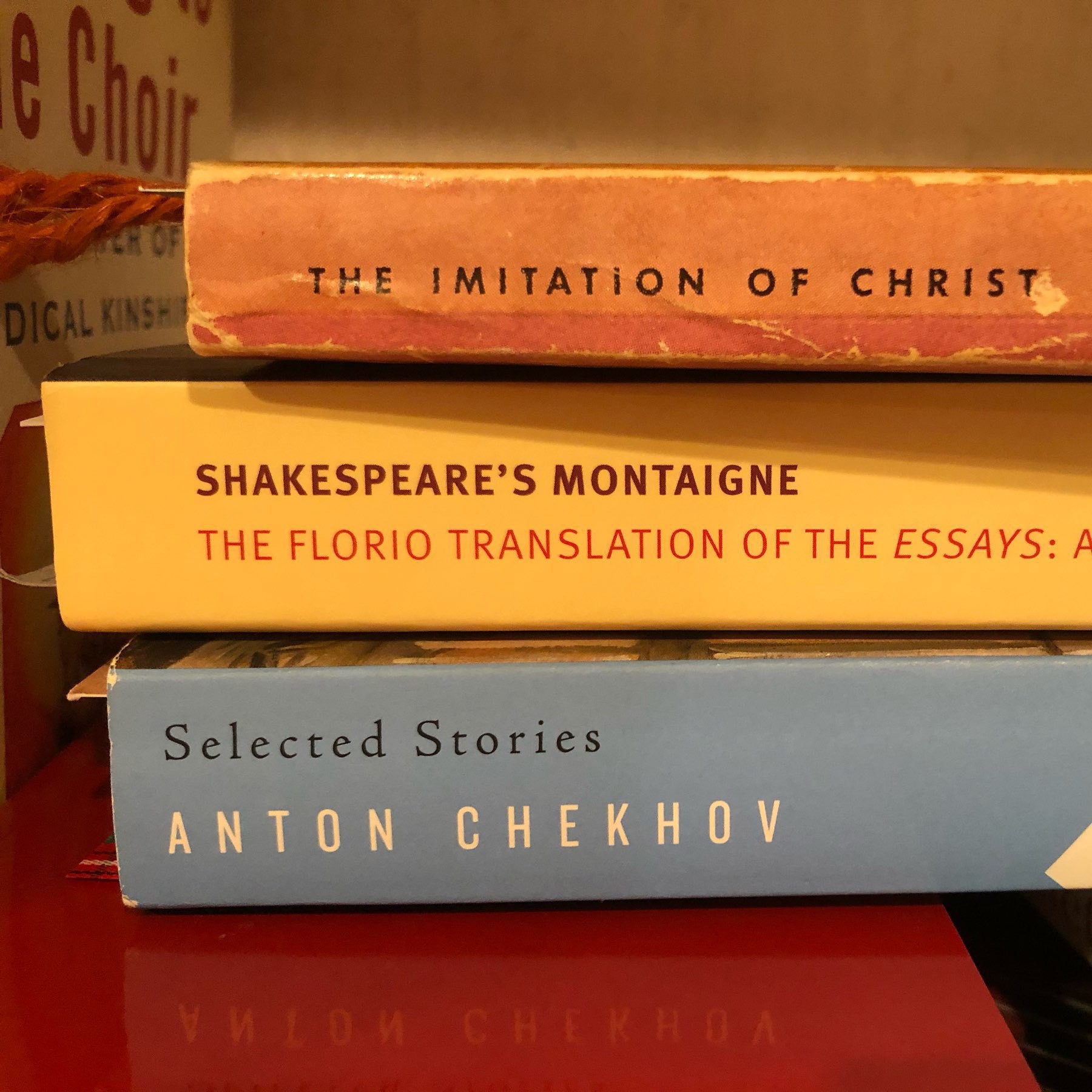
In my extra reading time these days, I’ve been taking @ayjay‘s suggestion to read essays and short stories to heart by reading Chekhov & Montaigne. Also revisiting an old favorite, The Imitation of Christ. 📚
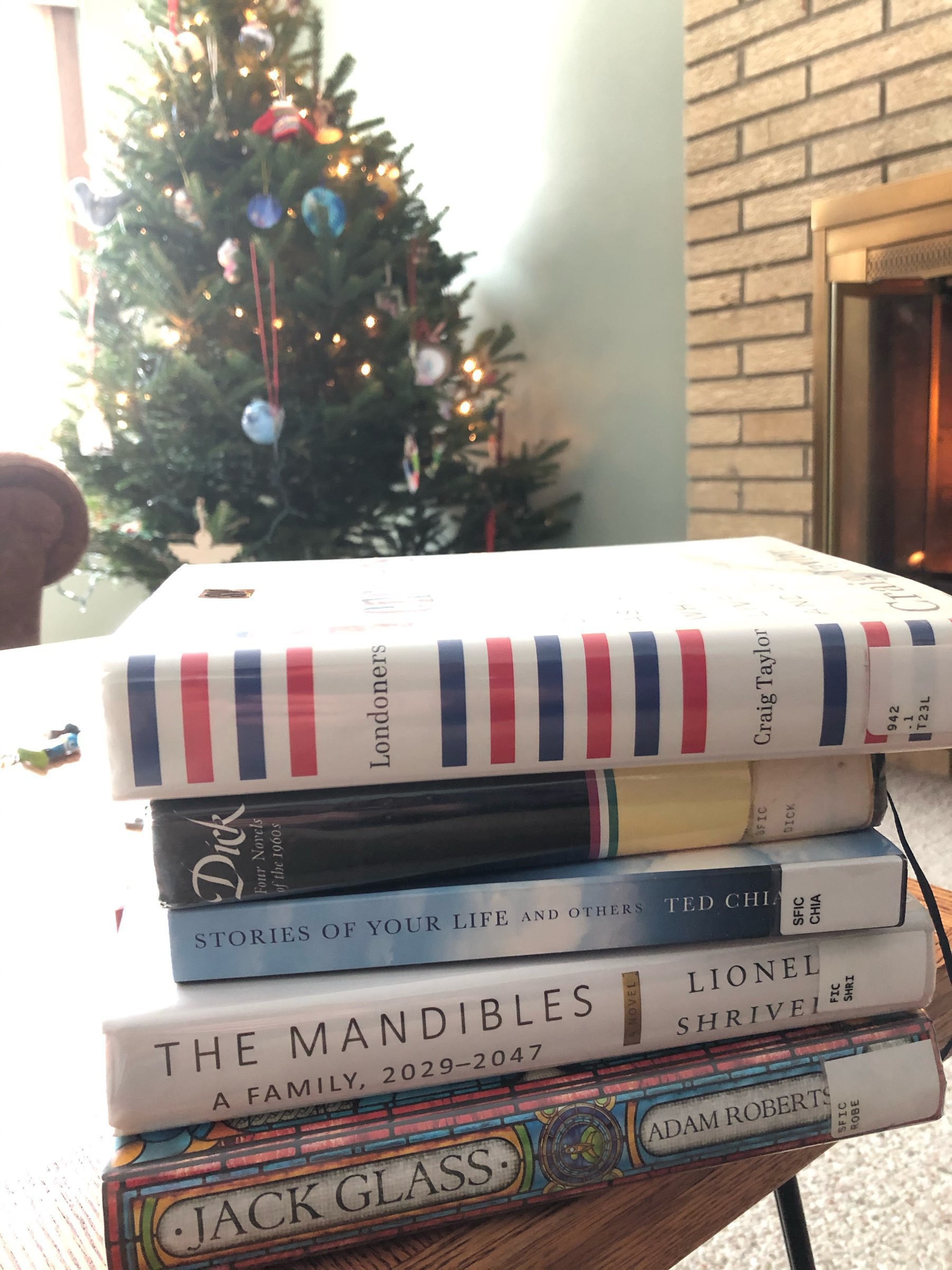
My selections from our trip the Shoreview Public Library today. Looking forward to some reading time over the next few days off… but I may have overestimated just how much time I’ll have. 📚
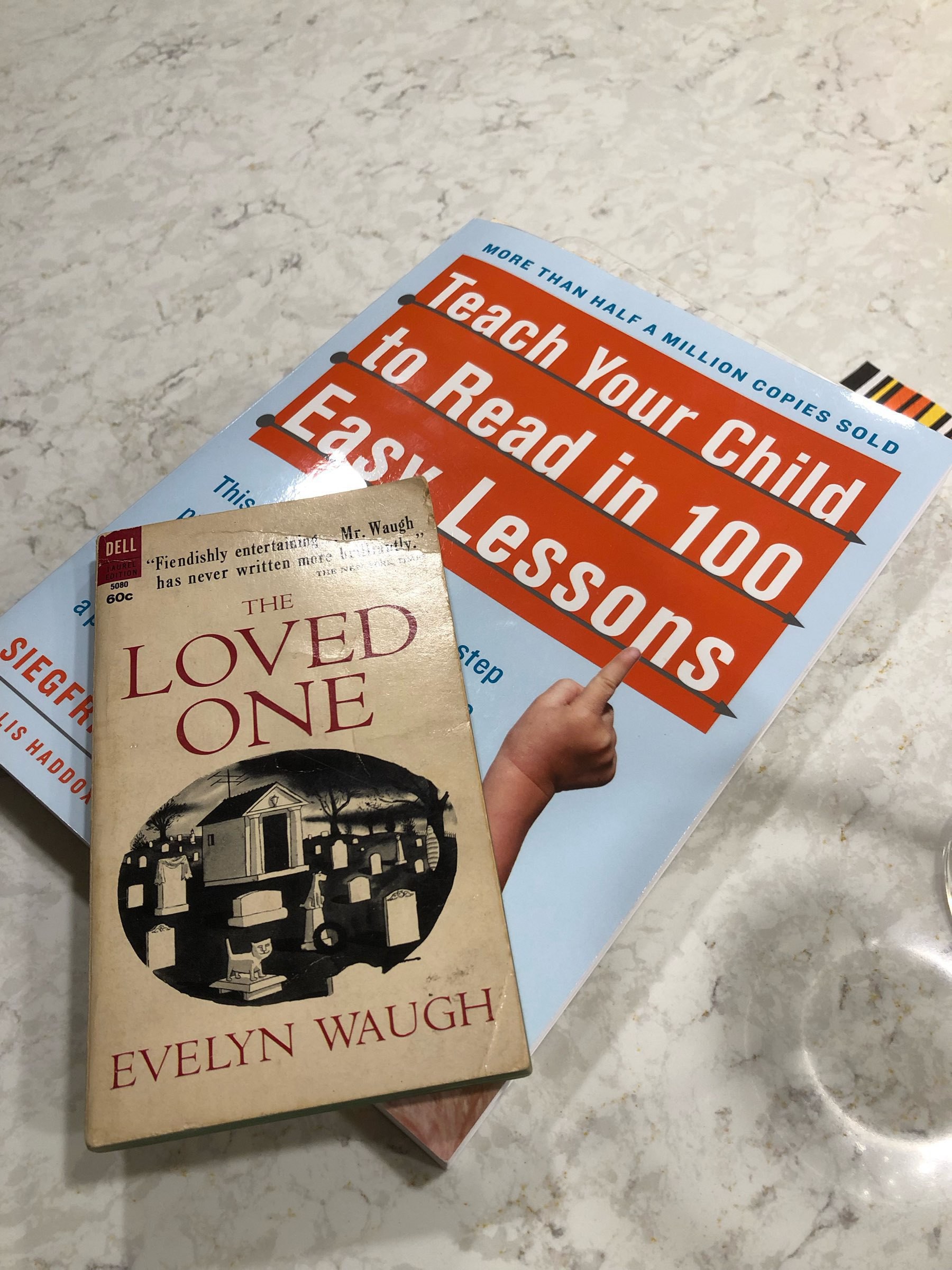
Current reading: Waugh & Engelmann 📚
Waugh’s satire of Hollywood doesn’t hold up particularly well; still, there are some funny scenes and critiques of American culture that still ring true. Waugh doesn’t always quite get American culture. Like Graham Greene, he knew enough to oppose & ironize, but not quite enough to pull off a successful, stinging satire.
I’m enjoying Teach Your Child to Read, mostly because my twin four-and-a-half year olds are also enjoying the lessons and proud of their progress. In another life I’d be a preschool or kindergarten teacher—I love this age, when language is exploding, memories are forming, and they’re starting to learn that their creativity can being humor or beauty or joy to the world.
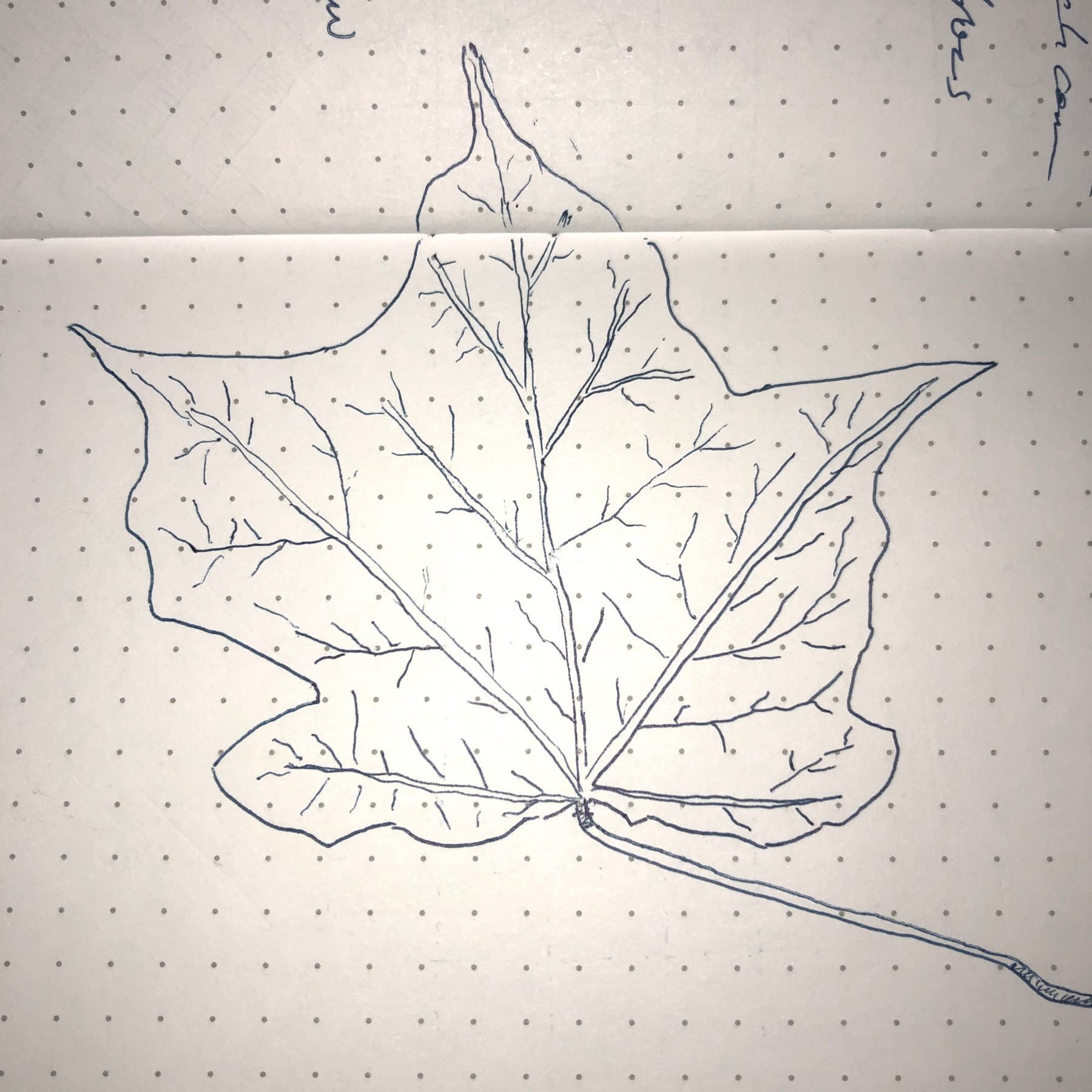
Autumn Leaf
One of Ruskin’s early lessons in The Elements of Drawing is to draw a leaf, as carefully and accurately as possible. Here’s my lunch-hour effort. 📚 🎨
Recently attempted, & abandoned 📚:
Current reading 📚: