
The a-fore-quoted interview with Cecil Taylor harmonizes with this interview with Ursula K. LeGuin, which begins with a lengthy and fascinating discussion of rhythm and grammar, the foundations of LeGuin’s own remarkable craft.
Cecil Taylor, RIP
Start with Ben Ratliff’s obituary for the NYT.
NPR’s coverage of Taylor’s life and work is also excellent:
- Jazz, Freed: On Cecil Taylor’s Expansive Brilliance
- an obituary by Tom Vitale
- finally, and most importantly, Taylor’s appearance on Marian McPartland’s Piano Jazz. It’s a wonderful episode; Taylor seems to be a gentle, strange, and caring person who’s remarkably humble about his remarkable improvisational gifts. He’s also a teacher whose only advice to a hypothetical student is:
Look, find one note on the instrument that pleases you. And then find another note that also pleases you in relationship to the first note. And then you build what is going to be your working material from the premise that it is pleasant for you to hear so that eventually what happens when you get ready, if you want to create, you don’t make these dichotomies that lead you astray. Everything you do, I feel, should be girded to making a creation. So that all of these exercises or the manipulation of material to create the house is always in your mind. So that it’s not extraneous. It’s not technique. It’s the sound that will lead to the creation. The only thing I could modestly suggest: Look, always remember that given the society we live in, if you’re going to do this, it’s something that you must love to do. You might as well create something that pleases you.
Replace “note” with “word,” “color,” “line,” and you have about the simplest pedagogy for teachers of any art. I’m grateful for his reminder that, despite the complexity of the world, the complexity of craft, the complexity of Taylor’s own music, ultimately art can and should be simple.
If you’d like to explore Taylor’s music, I’d suggest starting with For Olim, one of Craig Taborn’s favorite solo piano recordings according to the rich NYT profile of Taborn published last year.
Building Anglo-Saxon England
A fascinating new release from Princeton University Press: John Blair’s Building Anglo-Saxon England. Here’s the book description:
This beautifully illustrated book draws on the latest archaeological discoveries to present a radical reappraisal of the Anglo-Saxon built environment and its inhabitants. John Blair, one of the world’s leading experts on this transformative era in England’s early history, explains the origins of towns, manor houses, and castles in a completely new way, and sheds new light on the important functions of buildings and settlements in shaping people’s lives during the age of the Venerable Bede and King Alfred. Building Anglo-Saxon England demonstrates how hundreds of recent excavations enable us to grasp for the first time how regionally diverse the built environment of the Anglo-Saxons truly was. Blair identifies a zone of eastern England with access to the North Sea whose economy, prosperity, and timber buildings had more in common with the Low Countries and Scandinavia than the rest of England. The origins of villages and their field systems emerge with a new clarity, as does the royal administrative organization of the kingdom of Mercia, which dominated central England for two centuries.
H/T: the always-delightful daily newsletter Prufrock News
Timothy Murphy's *Devotions*: Art and Death
Reading Anthony Domestico’s review of Timothy Murphy’s latest book of poems, I was saddened to learn of Murphy’s stage IV cancer. He’s one of our great poets; the fact that he’s from my hometown, Fargo, has given me a particular fondness for his work:
Now separation has become my fear.
What was does not console,
what is, is past control—
the disembodiment that looms so near.
Read several of his poems at the Poetry Foundation.
I recommend this conversation in Democracy on whether political parties are dying or strengthening, though its conclusion—that parties are essentially content-less platforms—shouldn’t surprise anyone who lived through the last presidential election.
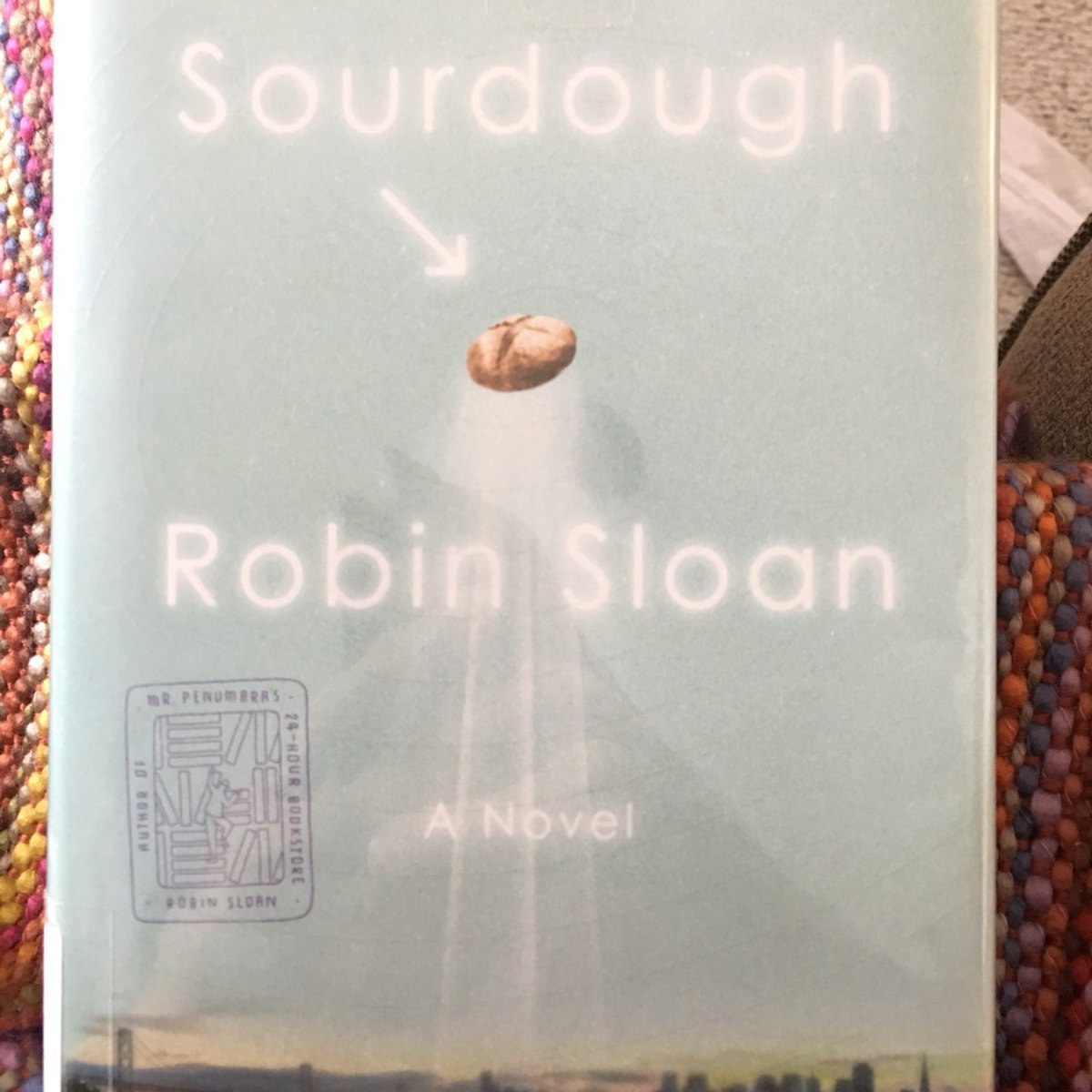
Robin Sloan’s Sourdough: like Mr Penumbra, simply delightful. I’m half done, and can’t put it down. Highly recommended!
Alan Jacobs makes a powerful and persuasive argument for the open web in The Hedgehog Review:
We need to revivify the open Web and teach others—especially those who have never known the open Web—to learn to live extramurally: outside the walls.
A wonderful essay in the TLS on Arnold as poet—his (deliberate) awkwardness, off-rhymes, and the “poetrylessness” of the Victorian age.


Robert Caro’s responses in this NYRB interview are profound, fascinating, and inspiring—as is the portrait of him at his typewriter.
Rebecca Solnit on writing and agency
The process of making art is the process of becoming a person with agency, with independent thought, a producer of meaning rather than a consumer of meanings that may be at odds with your soul, your destiny, your humanity, so there’s another kind of success in becoming conscious that matters and that is up to you and nobody else and within your reach.
~ From Rebecca Solnit’s excellent writing advice
Les Murray, “Animal Nativity”
The Iliad of peace began when this girl agreed. Now goats in trees, fish in the valley suddenly feel vivid.
Swallows flit in the stable as if a hatching of their kind, turned human, cried in the manger showing the hunger-diamond.
Cattle are content that this calf must come in human form. Spiders discern a water-walker. Even humans will sense the lamb,
He who frees from the old poem turtle-dove and snake, who gets death forgiven who puts the apple back.
Dogs, less enslaved but as starving as the poorest human there, crouch, agog at a crux of presence remembered as a star.
Restoring the Democrats’ foreign-policy vision
Samuel Moyn calls for Democrats to restore the liberal internationism that formed the core of its foreign policy, prior to Clinton and the rise of neoliberalism:
A foreign policy based on expansive militarism and endless war is neither liberal nor internationalist. If the true meaning of those now abused terms is to be recovered, a good deal of retrenchment and restraint is critical…. The United States cannot even begin to think about bringing freedom and equality to the rest of the world until it cleans its own house.
Rereading Mary McCarthy
B.D. McClay’s review essay on Mary McCarthy is excellent, homing in on precisely those qualities of her writing that make McCarthy so simultaneously worthwhile and difficult:
If neither God nor political ideology could be counted on as firm guidelines for behavior, what, exactly, was one supposed to use? While others leaned on concepts like decency, McCarthy herself moved in a different direction. Whatever was painful, whatever was hard to say, whatever you didn’t want to look at, whatever you were afraid to do—that was where you needed to direct your attention. Find, in yourself, in the world, the points of self-delusion, and expose them. Do this over and over. You could call this honesty, or a kind of emotional masochism, or the last remnants of a Catholic upbringing.
I read The Group as an undergraduate, and found it both brilliantly readable and incredibly mean-spirited. McClay’s essay helps me better understand this reaction. And learning of Mailer’s disgust and O’Conner’s support makes me much more inclined to read her other novels.
This delightful essay from Sven Birkerts describes his time with a trio of poet-pals who lived & taught in Boston in the 80s: Seamus Heaney, Joseph Brodsky, & (especially) Derek Walcott.
More from that essay on Paul Thomas Anderson:
Such restorative attachments are one response to the epidemic of spiritual hunger and spiritual crisis in Anderson’s American West, where the promise of Manifest Destiny had trailed off into the sea.
Paul Thomas Anderson’s “casually Catholic,” Californian upbringing
Wonderful essay in The Point on Paul Thomas Anderson:
Anderson describes himself as shaped by a casually Catholic upbringing, and in his films ideas about sin and expiation jostle against his distinctly Californian passion for the panaceas of personal therapy and self-help.
A single poem in your head
Seamus Heaney has noted that if a person has a single poem in his head, one that he returns to and through which, even in small ways, he understands his life better, this constitutes a devotion to the art. It is enough.
~ Christian Wiman, quoted in a wonderfully contrarian essay called “The Case Against Reading Everything”