





I’m a sucker for gossip & insider info on editors & publishing. This NYT piece on TLS editor Stig Abell was esp. delightful in uncovering Abell’s MN connections—I trust he’s also now an #MNUFC supporter.
Teju Cole, in conversation with Krista Tippett
I had the great privilege to listen in on Krista Tippett’s conversation with Teju Cole this evening. The subjects ranged widely: baptism, art and politics, Google and memory, Thomas Tranströmer, Elizabeth Bishop, improvisation and presence, and more.
Many thanks to my sister-in-law Krista for snagging the tickets; I’ll post the recording from the evening when it’s published on On Being. Till then, read the interview on the Saint Paul Chamber Orchestra’s Liquid Music blog.

Finished my first Muriel Spark novel this morning, Aiding and Abetting, and greatly enjoyed its very dark comedy. I will certainly read more of her. Look for some, er, Spark notes here soon.
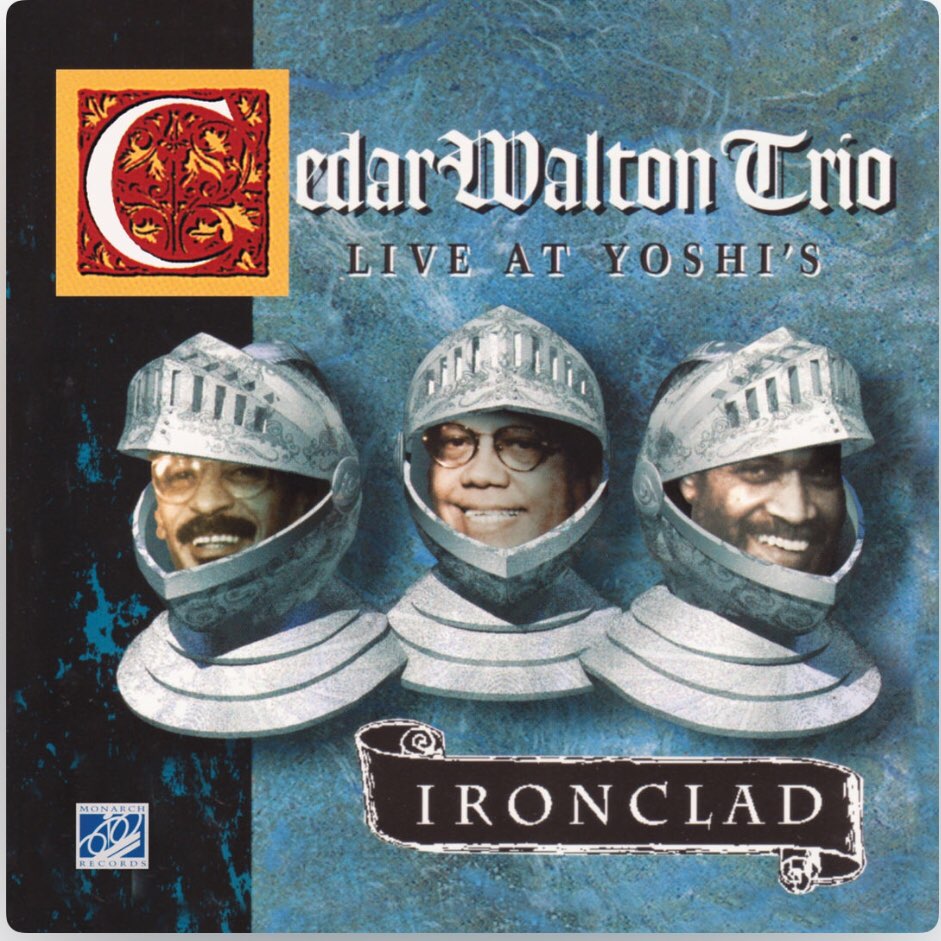
This morning’s listening: the Cedar Walton Trio’s Ironclad: Live at Yoshi’s (Apple Muisc link), featuring what is surely some of the greatest album cover art of all time.
All holy books are works of fiction.
Saw this bumper sticker today (on the way to church, of course). I disagree with some of this dude’s core assumptions—especially regarding the nature, truth, and value of fiction!

My good friend Brad wrote about Mississippi’s Yazoo River, where attempts to prevent flooding threaten to have dramatic unintended consequences elsewhere in the river basin.
Just wrote a long post on awkwardness in Vodolazkin’s “novel” Laurus — mjkaul.com/2018/05/0…
From the NYRB, a fascinating essay on Berenice Abbott, jazz-age photographer in NYC and Paris.
Time, place, and circumstance: they are like three balls that you toss in the air, and they control your life.
An exceptional essay by Garnette Cadogan, “Due North”—an oddly edited, but also delightful and profound, essay on walking NYC from the Upper East Side to the South Bronx.
These photos of Lake Baikal are absolutely stunning (though I could do without any of the ones with people in them).
*Laurus* and Dostoevsky
The further I go in Laurus, the more I see Dostoevsky all over the place. That’s not surprising—you can’t write a work of fiction about Orthodoxy set in Russia and without reflecting deeply on Dostoevsky. In some ways, it’s as if Laurus is a sequel to The Brothers Karamazov, with Arseny an Alyosha figure shaped by a holy elder who dies early on (Christopher / Fr. Zosima).
Moreover, death hangs over both books, intensely. I’ve struggled to read sections of Laurus, it’s so heavy (in fact, literal heaviness is a recurring image in Laurus). Imagine if Alyosha had in fact married Liza: the progression of the novel might look something like Laurus. The death of Dostoesky’s own son pervades Brothers, just as the death of Ustina and his son shapes the course of Arseny’s life in profound ways.
Dostoevsky had planned for The Brothers Karamazov to be the first of a multi-volume work; the whole work was to be called The Life of a Great Sinner. From his notes describing the work, it wouldn’t have looked anything like Laurus. But Laurus isn’t really even a novel (more on this idea later). Thematically, though, it’s reflecting on many of the same themes:
- holiness in a secular age
- universal responsibility for one another’s sins
- the infusion of God’s grace into creation
Which makes both books sound overbearingly pious. But I find both to be refreshingly honest. Arseny, in Laurus, is like Alyosha in another way: everyone assumes he’s holy, insusceptible to sin and temptation—but he knows that the opposite is true, and he’s as or more vulnerable than anyone, precisely because he’s so renowned for his “holiness.”
Addendum to my Cecil Taylor post: Ethan Iverson’s essay on Taylor is remarkable, and does justice to Taylor’s sui generis work.
Like every post on Iverson’s blog, it’s essential reading.


I’m finally starting Eugene Vodolazkin’s Laurus, in anticipation of the Anselm House book night in a week and a half. So far (50 pp in), it’s wonderfully strange, its medieval-modern form heavily dependent on pastiche and parataxis for its effects. I’ll hopefully write more soon.
Christian Democracy in Europe—and America?
This short essay in the Guardian makes a case for a Christian-democratic movement in the US to counter the rise of secular authoritarianism. The authors state that it was a distinctly Christian Democratic movement that successfully defeated fascism in Europe; they claim a similar movement is needed here.
Given evangelicals’ remarkably comprehensive (and revolting) capitulation to Trumpism, and liberal Protestants’ own unthinking embrace of the Democratic platform, it’s hard to see how such a movement could gain any traction. (The American Solidarity Party is giving it a go, but their quest seems quixotic rather than realistic).
Christian democracy’s three core principles, according to the authors:
- a belief in the “inherent dignity of the human person” that leads to a pro-life stance that includes opposition to both abortion and the death penalty
- a “moral critique of capitalism”
- a “resolute internationalism, which translates into a commitment to both supranational cooperation amongst established powers and a duty of solidarity with respect to less fortunate peoples and countries.”
There have been times when the Democrats have had a lot more integrity than they currently do with respect to #2 and #3. And there have even been times when they’ve been hospitable to pro-life members. But it’s quite a feat of memory to muster more than a handful of recent exceptions (Minnesota’s own Collin Peterson is one.)
As for the Republicans, they’ve always paid lip service to pro-life policies while doing their best not to enact them—and thus lose a block of voters that might otherwise support Democrats. Their internationalism is certainly resolute—but it’s of a war-mongering variety utterly lacking in compassion for or comprehension of any foreign state other than Israel. And a moral critique of capitalism? Well, don’t hold your breath.
Patrick Deneen has argued that the dominant movement in each party is toward libertarianism: the Republicans increasingly jettison socially conservative policy initiatives, while Democrats do their smarmy best to cozy up to the Davos set while wondering why their base doesn’t show up to vote. So I think Deneen’s clearly right. In this context, that means that any Christian democratic movement is going to be as repulsive to Democratic politicians as it is to Republican ones. And given the structure of our politics, any such movement will have to arise from within one of two parties that are actively opposed to its core tenants.
Christian democracy is, frankly, incomprehensible in modern American politics, however necessary it may be. In any case, though, the essay is worth reading, as is the excellent Samuel Moyn essay they quote from. For a deeper historical perspective on the rise of Christian democracy in Europea, read Tony Judt’s Postwar.
The a-fore-quoted interview with Cecil Taylor harmonizes with this interview with Ursula K. LeGuin, which begins with a lengthy and fascinating discussion of rhythm and grammar, the foundations of LeGuin’s own remarkable craft.
Cecil Taylor, RIP
Start with Ben Ratliff’s obituary for the NYT.
NPR’s coverage of Taylor’s life and work is also excellent:
- Jazz, Freed: On Cecil Taylor’s Expansive Brilliance
- an obituary by Tom Vitale
- finally, and most importantly, Taylor’s appearance on Marian McPartland’s Piano Jazz. It’s a wonderful episode; Taylor seems to be a gentle, strange, and caring person who’s remarkably humble about his remarkable improvisational gifts. He’s also a teacher whose only advice to a hypothetical student is:
Look, find one note on the instrument that pleases you. And then find another note that also pleases you in relationship to the first note. And then you build what is going to be your working material from the premise that it is pleasant for you to hear so that eventually what happens when you get ready, if you want to create, you don’t make these dichotomies that lead you astray. Everything you do, I feel, should be girded to making a creation. So that all of these exercises or the manipulation of material to create the house is always in your mind. So that it’s not extraneous. It’s not technique. It’s the sound that will lead to the creation. The only thing I could modestly suggest: Look, always remember that given the society we live in, if you’re going to do this, it’s something that you must love to do. You might as well create something that pleases you.
Replace “note” with “word,” “color,” “line,” and you have about the simplest pedagogy for teachers of any art. I’m grateful for his reminder that, despite the complexity of the world, the complexity of craft, the complexity of Taylor’s own music, ultimately art can and should be simple.
If you’d like to explore Taylor’s music, I’d suggest starting with For Olim, one of Craig Taborn’s favorite solo piano recordings according to the rich NYT profile of Taborn published last year.
Building Anglo-Saxon England
A fascinating new release from Princeton University Press: John Blair’s Building Anglo-Saxon England. Here’s the book description:
This beautifully illustrated book draws on the latest archaeological discoveries to present a radical reappraisal of the Anglo-Saxon built environment and its inhabitants. John Blair, one of the world’s leading experts on this transformative era in England’s early history, explains the origins of towns, manor houses, and castles in a completely new way, and sheds new light on the important functions of buildings and settlements in shaping people’s lives during the age of the Venerable Bede and King Alfred. Building Anglo-Saxon England demonstrates how hundreds of recent excavations enable us to grasp for the first time how regionally diverse the built environment of the Anglo-Saxons truly was. Blair identifies a zone of eastern England with access to the North Sea whose economy, prosperity, and timber buildings had more in common with the Low Countries and Scandinavia than the rest of England. The origins of villages and their field systems emerge with a new clarity, as does the royal administrative organization of the kingdom of Mercia, which dominated central England for two centuries.
H/T: the always-delightful daily newsletter Prufrock News
Timothy Murphy's *Devotions*: Art and Death
Reading Anthony Domestico’s review of Timothy Murphy’s latest book of poems, I was saddened to learn of Murphy’s stage IV cancer. He’s one of our great poets; the fact that he’s from my hometown, Fargo, has given me a particular fondness for his work:
Now separation has become my fear.
What was does not console,
what is, is past control—
the disembodiment that looms so near.
Read several of his poems at the Poetry Foundation.