
Reading
What is mobile is always the most just.
~Robert Walser. So many great sentences in Walser. 📚
Every last silly little thing has its unspeakably swift justification, its good clever grounds.
~Robert Walser in 1907, writing about the Internet 📚
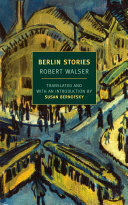
Currently reading: Berlin Stories by Robert Walser 📚
I encountered a stunning book of photos on the Getty’s website today: Kazumasa Ogawa’s Some Japanese Flowers, from 1896.
19th-century photograph is always shocking & disorienting—how foreign, yet contemporary. 📚

Currently reading: The Battle for Your Brain by Nita A. Farahany 📚
Her contention is that control over our own inner life will become increasingly fraught in coming years, as advances in neurotech & pharma combine to create new ways of monitoring, interpreting, & responding to our brainwaves.
I’m only a couple chapters in, but she lays out so clearly how tech is building on-ramps to this surveillance—through gamification, virtual reality, & other developments that are pitched as innocuous & “free”.
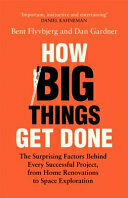
Finished reading: How Big Things Get Done by Bent Flyvbjerg 📚
For the most part, a very good and useful book on project management—research grounded in reality, presenting some useful heuristics. Fans of Taleb & Kahneman/Tversky will like it.

Nicholas Dames on literary studies 🔗 📚
What happened to literary studies?
If professionalization was the flaw in the construction of the bridge, making it unstable, it turns out there’s a meteor heading for the bridge anyway: the steady diminution of literature’s role in a culture where electronic, networked media is dominant. […]
By lowering the barrier to entry, the Internet encouraged an early 21st-century efflorescence of occasional criticism and spontaneous theorizing that fostered vibrant subcultural readerships.
I believe that the coming decades will be shaped by a restoration of the humanities to non-professional, non-credentialed, non-university contexts. The Internet will continue to provide new forms not just for criticism but for pursuing literary education outside formal degrees.
This will be a good thing, though, sadly, it will be accompanied by the closure of many liberal arts colleges.

Finished reading: Skin in the Game by Nassim Nicholas Taleb 📚
Currently reading: How Big Things Get Done by Bent Flyvbjerg 📚

Currently reading: Night Train by A. L. Snijders; translated by Lydia Davis 📚

Currently reading: War and Peace by Leo Tolstoy 📚
Currently reading: Skin in the Game by Nassim Nicholas Taleb 📚
Aesthetic judgments in an anti-aesthetic age 📚 🔗
Just because we don’t believe in aesthetic standards as a culture doesn’t mean we aren’t making constant aesthetic judgments that rely on a wide range of hierarchies:
[Study authors] found that writers ‘with an elite degree (Ivy League, Stanford, University of Chicago) are nine times more likely to win than those without one. And more specifically, those who attended Harvard are 17 times more likely to win.’ They found that half of the prize-winners with an MFA “went to just four schools: [University of] Iowa, Columbia, NYU, or UC Irvine. Iowa has special clout: its alumni ‘are 49 times more likely to win compared to writers who earned their MFA at any other program since 2000.'"
I find the author’s conclusion inspiring:
Today when asked for advice about how to be a writer, I say: Find writing you love and follow it. Make those writers your writers. Read each other, publish each other, create literature that speaks from where you are.
You don’t need a BA to do this, much less an MFA. We need to rebuild cultural institutions outside the confines of our academic-media-publishing complex.
Rowan Williams on Iain McGilchrist 📚
Rowan Williams reviews Iain McGilchrist’s The Matter With Things. A masterful and appreciative review, unsurprisingly.
Williams points out that so many criticisms of McGilchrist’s work reflect exactly the tendencies that McGilchrist traces and decries in his work.
He also rearticulates McGilchrist’s exceptionally helpful descriptions of thinking, truth, science, and objectivity:
Thought takes time; encountering a limit suggests new questions — including the question of whether we have thus far been asking the right questions. Thinking develops, but that does not mean that it follows a linear path towards determinatively complete representation. It must, by its very nature, manage and reflect upon its own incompleteness and the inescapability of difficulty and mystery.
I’m now over halfway through the first volume of The Matter with Things; as with Williams, I can’t recommend it highly enough.

Finished reading: A Gentleman in Moscow by Amor Towles 📚

Finished reading: The Nature of Oaks by Douglas W. Tallamy 📚
Despite EA & crypto, we're still living in the Victorians' world 🔗💰📚
Derek Thompson’s short, pensive essay on his own entanglement with effective altruism (EA) and Sam Bankman-Fried leaves off before getting to a problem that enabled both, a problem with the Internet in general: we humans just seem to be at our best when operating locally, in-person.
Just as crypto’s promise of “trust in a trustless world” struck many as ridiculous, so too EA has been ridiculed for its impersonal approach to altruism. George Eliot in Middlemarch; Dickens in Bleak House; Trollope in The Way We Live Now: each of these novelists understood & satirized the ways in which, aided by finance, we are always tempted to abstract ourselves away from our local communities and traditions.
Heeding their warning may make our altruism less “efficient,” but perhaps that’s ok—perhaps less altruism is required when our communities are healthy, robust, and based on trust, rather than writing it off as an impossibility in a “global age”?
In other words, perhaps the problem isn’t that Thompson was taken in by two major Internet-based movements that both just happened to be off in ways that permitted someone like SBF to trick his way through. Perhaps it’s simply that the SBFs in our society who are most perfectly situated to exploiting the “trustless” (impersonal, inscrutable) frameworks we inhabit. After all, SBF seems not to have flourished in the more traditional institutions he inhabited.
Currently reading: The Nature of Oaks by Douglas W. Tallamy 📚
D.C. Schindler on beauty and hospitality 📚
Instead, beauty effects a completeness that strengthens our capacity to be open and hospitable. It is fitting, in this respect, that we tend to think of giving the quality of beauty, more directly than the quality of truth or goodness, to our background surroundings, the encompassing atmosphere inside of which our existence unfolds.
~from Love and the Postmodern Predicament