
I’m re-reading a favorite novel, Thomas Mann’s The Magic Mountain, preparing for a reading group this summer.
Looking for a good summer read? I’d highly recommend MM—you can’t go wrong with a long, philosophical novel about time, sickness, & death. (It’s funny, too!) 📚
The St. John Passion at the Lab Theater
I’m proud of my sister-in-law, Krista Costin for her role in the Oratory Bach Ensemble’s production of the St. John Passion at the Lab Theater this weekend. To quote from the Star Tribune’s review,
Six female dancers provided a sensitively balletic counterpoint to mezzo-soprano Krista Costin’s probing account of “Von den Stricken meiner Sünden,” an aria in which the significance of Christ’s suffering is contemplated.
The Acropolis vs Mount Athos
Monasticism is not a theology; it is a way of life. Abbot Eliseus told me that there are two foundational monuments in Greece: the Acropolis and Athos. “But one is dead and the other is living,” he continued. “One is an idea, the other is a living experience.”
From a remarkable travelogue by the secular philosopher Simon Critchley in the NYT.
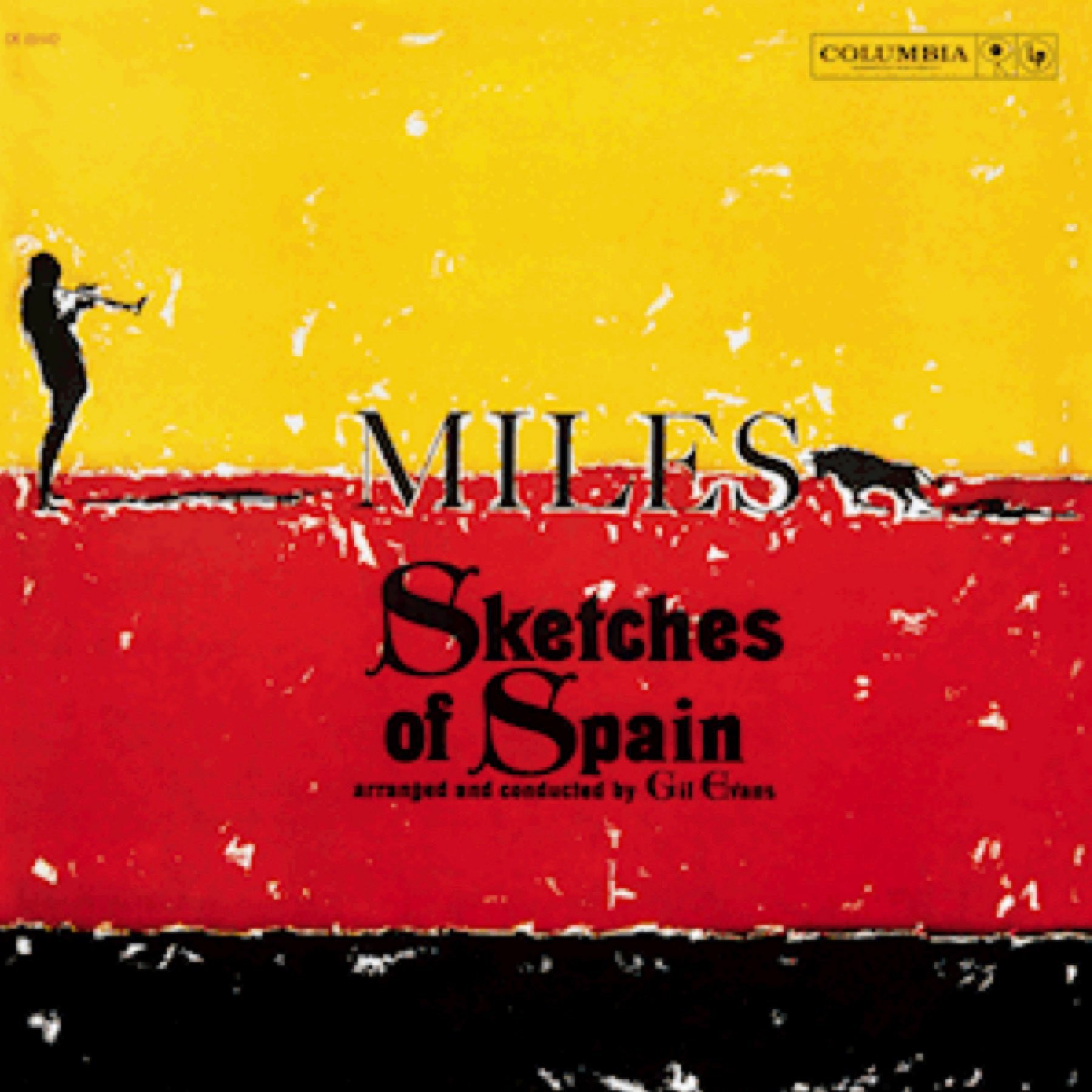
I’ve been listening to a lot of Third Stream recently. So far, though, nothing I’ve found has come close to the depth & beauty of Sketches of Spain. 🎶 🇪🇸
Here’s a delightful symposium on personal libraries. The best entries, in my opinion, are those from Sarah Ruden & Peter Travers.
The symposium inspires me to write the story of my own personal library. I’d love to read others from the microblog community, as well. 📚
A disappointingly short, but still worthwhile, portrait of editorial illustrator Anna Parini, whose striking work has been all over the place of late. 🔗
“Zuckerberg says Facebook will shift focus to private sharing”
I’m sure they’ll be completely transparent and absolutely vigilant, whatever they come up with. There’s no way they’d ever use their platform for personal gain when it suits them. Zuckerberg is definitely the guy to trust when it comes to communications, especially private ones!
What I love most, though, is that Zuckerberg contrasts the push for private communication channels with “today’s open platforms”—e.g. Facebook. In what world is Facebook an open platform? Only in his.
Recommended: this excellent review of a book I plan to read as soon as possible: Martin Hägglund’s This Life: Secular Faith and Spiritual Freedom. 📚
I finally cancelled my Twitter account. It was time—I had my fill of toxic nastiness & virtue-signaling (later than many). Very glad to have an independent, thoughtfully designed platform in Micro.blog.
I haven’t seen The Green Book, and don’t plan to, but still highly recommend reading Ethan Iverson on Don Shirley over at the New Yorker’s culture desk. 🎬 🎶
Grateful for some time this morning to read by the fire. More grateful still for a new book by a favorite poet.

The incomparable Brian Phillips is featured on the latest episode of Bookworm, alongside man-eating tigers, a man-eating-tiger-hunting man, death on the Iditarod, and Impossible Owls.
“How Facebook Deforms Us” - a thorough, thoughtful review by LM Sacasas of Siva Vaidhyanathan’s Antisocial Media.
Just discoereved @motyar’s MarkShow: Markdown to Slideshow app. It’s wonderful! I lesson-plan in Markdown, & have been looking for a tool like this forever. Thank you!
Recommendation: Spectacle App
In my day job as a technical writer, I use Windows; it’s really not been a great experience, but that’s a subject for another day.
There is one feature I LOVE, though: using the Windows + arrow keys to arrange windows around the desktop. Till now, I haven’t found a good alternative on the Mac.
But today I found @spectacleapp, and it’s wonderful so far! Free, open-source, customizable, maintained. Check it out here.
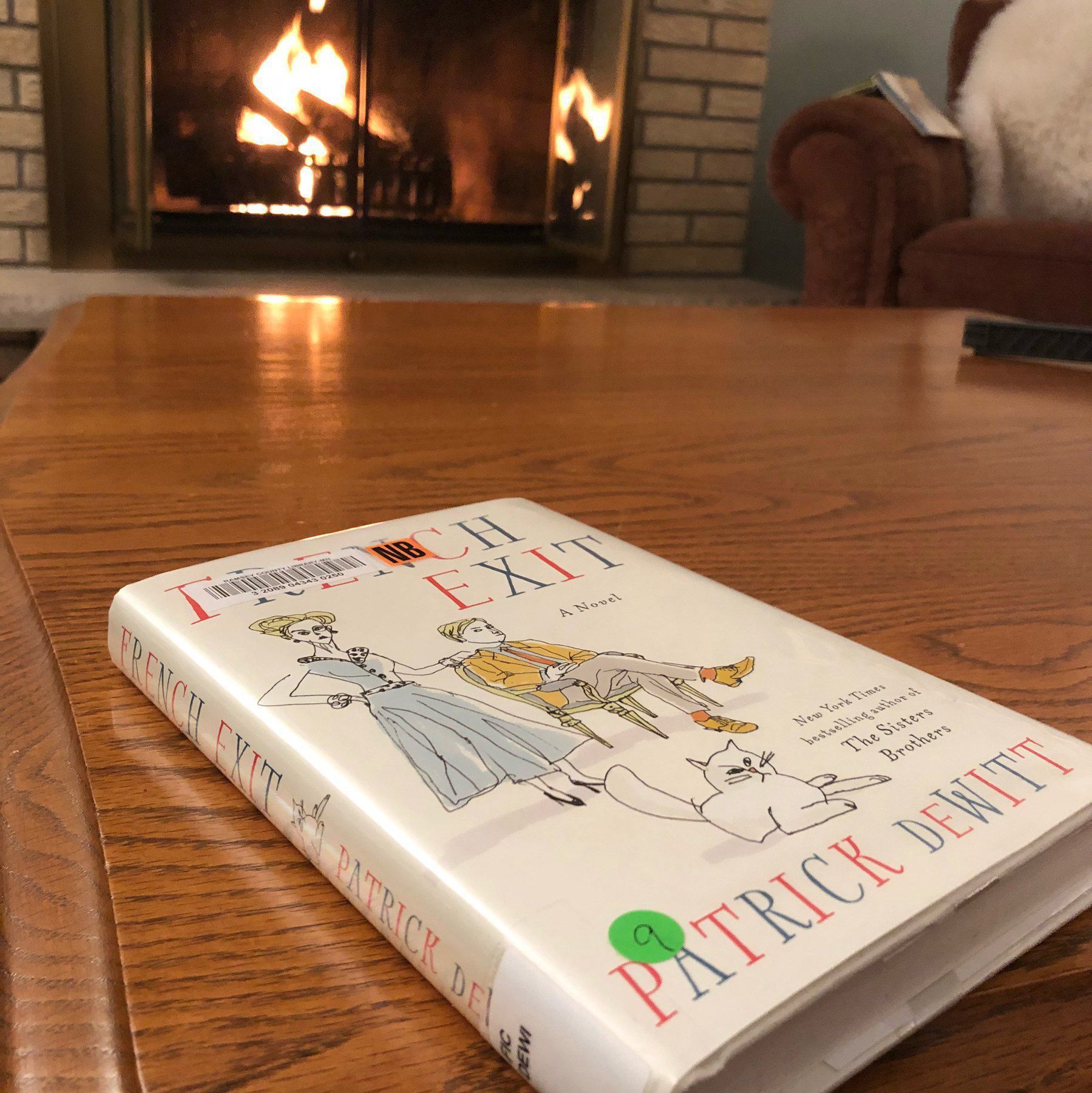
I read a wonderful novel tonight, Patrick DeWitt’s very dark & very comedic “tragedy of manners,” French Exit. (h/t the display stand at the local public library.) 📚
I hadn’t heard of translator Anthea Bell until I read her obituary yesterday. But then I realized that the day before, I had started one of her translations: of Stefan Zweig’s The World of Yesterday. So far, the book is profound, tragic, & absolutely captivating. 📚
The implausible idea of a "chief ethics officer"
I read Kara Swisher’s recent column on the need for chief ethics officers in Silicon Valley with great interest & great skepticism.
Swisher documents, with droll understatement, just a few of the ethical “quandaries” [their words] our giant mega-corporate start-ups have faced (or created):
- Corporations accepting loads of money from Saudi Arabia (cozying up to Saudi Arabia is a problem they share with the NYT itself, incidentally)
- Facebook lying (again!), this time about an in-home video device named Portal that will, of course, exchange your data for ad revenue
- Elon Musk duping everyone, including himself, on Twitter
- Google getting hacked & not telling anyone
Swisher goes on to say that Salesforce CEO Marc Benioff is in the process of hiring a chief ethics officer to “help anticipate and address any thorny conundrums it might encounter as a business."
Less concretely, 23andMe CEO Anne Wojcicki has “toyed with the idea of hiring a chief ethics officer.” But Wojcicki rejected the idea, saying “I think it has to be our management and leaders who have to add this to our skill set, rather than just hire one person to determine this.”
Of course, ethics isn’t a “skill” that can be added to anyone’s set. And the idea of a chief ethics officer is ridiculous for many more reasons. Among them:
- The CEthO role would be most valuable when in opposition to the rest of the C-suite. In other words, it would be most valuable when it was putting a stop to ideas, products, strategic directions deemed most valuable to the rest of the board, not to mention shareholders
- The CEthO’s role at most Silicon Valley corporations would, if effective, involve a fundamental shift in (not to say abandonment of) those corporations' products & business plans
- Hiring a CEthO is an impulse borne out of the desire to seem ethical without necessarily doing anything differently—or, at worst, to set up a scapegoat for failures of ethics within these organizations. It’s impossible to imagine someone in this role having a seat at the table when major decisions are made, unless by government mandate.
- The corporations most in need of a CEthO are those least likely to ever have one, much less an effective one. Others don’t need one, because ethical reflection was a significant and formative part of their strategic planning and product development from the beginning. These are, of course, precisely the ones most likely both to hire one and to enable that person to be successful.
These are just the obvious, institutional problems. The real problems go beyond these ones and get into questions of meta-ethics: whose ethics are normative? How can any one ethical traditions be meaningful and normative within pluralistic corporation? How does a corporation with genuine obligations to customers, employees, and shareholders balance seeking profit and behaving ethically, when the two are in tension?
My proposal? Some sort of requirement for an independent ombudsman or public advocate. The problem with startups isn’t that they face ethical “quandaries" now and nobody did before. Rather, it’s that the scale and reach of these startups makes the consequences of their ethical failures much more significant, more widespread, more consequential. Someone in a public advocacy role could at least make sure that the public knows the truth—and true scale—of the ethical failures, sometime relatively close to when they happen.
Of course, scale is precisely these startups' most significant competitive advantage. So don’t expect to suddenly start seeing either CEthOs or ombudsmen popping up throughout the Valley.
A wonderful short essay on soccer & politics in Brazil, from Andrew Downie in the London Review of Books: Sócrates & Brazilian Democracy.
Joan Barry & two forms of political belief
This article is fascinating. It follows Joan Barry, a Missouri Democrat whose politics don’t neatly fit entirely within party lines, as she tries to make some room for pro-life Democrats within the party. I think it reveals some damaging assumptions undergirding contemporary political life. Consider why one person quoted rejects Barry’s position:
Right now it’s really important to stand for something.
Later on, someone else uses very similar language to dismiss Barry:
I don’t understand Democrats who quote Truman and F.D.R. and then act like they are terrified to run as an actual Democrat. You have to believe in something in order for somebody to believe in you. You can’t be such a watered-down thing.
In both cases, the speakers assume that Barry doesn’t “believe in" or “stand for” anything—and she’s taking action precisely because she does believe in and stand for something. Is she “terrified” or “watered down”? No, of course not. She’s just disagrees with one tenant of the party platform. She’s trying to find ways to welcome a slightly wider range of opinion into the party so that it can try to attract voters in an increasingly Republican state.
There are two very different forms of political belief here. One believes in the party first and foremost, and the political positions come because of or unquestioningly along with the party. It’s an absolutist, all-or-nothing rhetoric that treats party platforms as eternal, unchanging, and inviolable.
The other form (Barry’s position) suggests belief first of all in principles that may or may not neatly align with either party. This form of political belief might lead to new mixes of political positions that might be far more internally consistent than the parties as currently aligned, and that might make more room within either party for people who dissent from some of that party’s positions but strongly support others.
It seems like the Democrats increasingly insist on and express the former. If they want to actually win elections, I think they’ll need to be more willing to adopt—or simply, merely accommodate—the latter.